Knee Pain; Assessment

Introduction

For any patient presenting with knee pain, the initial evaluation should focus in excluding urgent cases and considering the need for referral to a more appropriate specialist.

Patients for urgent referral include those with;

  • Severe pain or swelling
  • Severe instability
  • Patients unable to bear weight (Associated with acute trauma)
  • Patients with signs of joint Infection.
    • Fever
    • Swelling
    • Erythema
    • Limited ROM

Subjective Assessment

Key subjective information to obtain includes;

  1. Age
  2. Sex
  3. Location of any symptoms
  4. Onset
  5. Duration
  6. Quality of pain (VAS)
  7. Associated Mechanical or Systemic symptoms
  8. History of swelling
  9. Description of preceding trauma if any
  10. Previous medical history/surgical procedures.

Location

Anterior knee pain

Isolated anterior knee pain suggests involvement of patella, patella tendon or its attachments

This would suggest disorders such as;

  • Patellofemoral pain syndrome which is exacerbated by prolonged sitting or climbing stairs.
  • Quadricep or patella tendinopathy (Jumpers’ knee) characterized by anterior knee pain in athletes or other adults with overuse from running or jumping sports.
  • Osgood-Schlatter Disease (tibial apophysitis) or Sinding-Larsen-Johnson syndrome (distal patellar apophysitis) characterized by insidious onset of anterior pain in adolescents during rapid growth periods as well as overuse.
  • Prepatellar bursitis which causes patellar-localized pain and swelling. It can occur with isolated blunt trauma, repetitive injury or infection of the overlying skin.

Medial or Lateral pain

Medial or lateral knee pain occurring with corresponding joint line tenderness may indicate meniscal derangement or a sprain or rupture of a collateral ligament (In Acute injury and in Chronic Overuse).

Pes anserine bursitis in a common cause of medial knee pain often caused by overuse or blunt injury (pain exacerbated by flexion and extension of knee).

In adolescents experiencing medial knee pain with or without concurrent hip pain should be evaluated for slipped capital femoral epiphysis. (referred pain).

Chronic lateral knee pain in cyclists, or other activities involving knee flexion is common in iliotibial band syndrome.

Posterior knee pain

Isolated posterior knee pain is less common. However, it may occur in symptomatic popliteal (baker’s) cyst.

Posterior knee pain after acute trauma may suggest injury of the posterior cruciate ligament and the posterior potion of the meniscus, quadriceps tendons or the neurovascular structures.

Chronic posterior knee pain may suggest hamstring tendinopathy.

Diffuse knee pain

Chronic, diffuse knee pain in adults older than 50 years is common in knee osteoarthritis especially if the pain is worse at the end of the day, exacerbated by weight bearing activities and is relieved by rest.

Acute diffuse atraumatic pain may indicate an infectious etiology, gout or rheumatoid arthritis. Rheumatoid arthritis is more likely if pain is bilateral and occurs simultaneously in other joints.

In adolescents, atraumatic diffuse pain that worsens with activity requires imaging to assess for osteochondrosis.

Atraumatic diffuse pain that persists at rest or that which is worse at night should raise suspicion on malignancy.

Mechanical Symptoms

Mechanical symptoms such as locking, buckling or catching suggest internal derangement, possibly instability but they can also occur in medial plica syndrome.

Popping sensation at the time of injury may occur in meniscal or ligamentous tears.

Locking of the knee in flexion, suggests meniscal tear.

Swelling

In acute injury, joint effusion strongly suggests internal derangement.

Swelling that occurs immediately (mins – hours) after injury suggests a ligament rapture, intraarticular fracture or patella dislocation.

Swelling that appears hours – days after injury suggests a meniscal tear.

Atraumatic swelling with erythema or palpable warmth implies gout, or pseudogout, arthritic flare or infection.

Swelling that is limited to borders of the patellar suggests prepatellar bursitis.

Mechanism of Injury

To determine mechanism of injury, gather information about pain onset, positioning of knee during and after injury and subsequent weight bearing status.

Meniscal tears result commonly from twisting injuries in the weight bearing knee.

Ligamentous rapture result from excess deceleration applied to weigh bearing, fixed, lower extremity or a direct blow to the lateral or medial knee.

Fracture should be considered if patient are unable to walk or limp at least four steps both immediately after injury and at first presentation.

Objective Assessment

Objective assessment will involve;

  1. Inspection
  2. Palpation
  3. Range of Motion
  4. Neurovascular testing
  5. Special Provocative Tests
  6. Radiographic examination which should be reserved for;
    1. Chronic knee pain (> 6 weeks)
    1. Acute Traumatic pain

Inspection

Inspect for;

  1. erythema
  2. Swelling
  3. Bruising
  4. Lacerations
  5. Gross deformity
  6. Discoloration
  7. Asymmetry of bony or soft tissue landmarks (atrophy and valgus or varus)

Palpation

Palpation to assess for pain over all the bony and soft tissue landmarks, assess warmth and effusion.

Pes anserine bursitis manifests as a tender nodule over the medial proximal tibia approximately 3 cm distal to the joint line.

Plica can be appreciated as a thin band near / overlying the medial joint line.

A joint that is warm or warmer than tissue above or below the joint indicates infection or inflammation

Ballottement test and milking of the suprapatellar pouch while patient supine and the injured knee is in extension to assess joint effusion.

Range of motion

Normal range of motion extension (0 to -10 degrees) to flexion (135 degrees)

Special (provocative tests)

 Special/provocative tests are used to assess specific structures of the knee. Accuracy of each test varies. Pain and effusion may limit the usefulness of these tests in the acute setting requiring repeated testing or waiting until effusion has reduced.

Tests for anterior cruciate ligament injury

Lachman test

  • Patient lying supine
  • Leg slightly externally rotated and flexed (15o to 30o)
  • Place one hand behind the tibia (thumb being on the tibial tuberosity) and the other on the patient’s thigh.
  • Pull the tibia anteriorly
  • Test positive if there is a soft or mushy end feel.

Anterior Drawer test of the knee

  • Patient lying supine
  •  Hip flexed at 45o
  • Knee flexed at 90o
  • Stabilize the foot (by sitting on the dorsum of the foot)
  • While ensuring that the hamstrings are relaxed, grasp the proximal lower leg, just below the tibial plateau or tibiofemoral joint line, and attempt to move the lower leg anteriorly.
  • Test is positive if there is a lack of end feel or if there is excessive laxity compared to the other limb.

Pivot Shift Test

  • Patient lying supine with legs relaxed.
  • One hand of the examiner at the heel while the other hand is at the proximal tibia just distal to the knee.
  • The examiner applies valgus stress and an axial load while internally rotating the tibia and flexing the knee.
  • Test is positive if there is subluxation of the tibia.

Test for posterior cruciate ligament injury.

Posterior drawers test

  • Patient lying supine
  • Hip flexed at 45o
  • Knee flexed at 90o
  • Stabilize the foot (by sitting on the dorsum of the foot)
  • Grasp the proximal lower leg, just below the tibial plateau or tibiofemoral joint line, and attempt to move the lower leg posteriorly.
  • Test is positive if there is a lack of end feel or if there is excessive laxity compared to the other limb.

Meniscal tear tests

Thessaly test

This test aims to reproduce dynamic joint loading.

  • Patients stands flatfooted on one leg (5o knee flexion)
  • With the examiner supporting the patient via a his/her outstretched hand, the patient rotates his/her knee and body internally and externally three times.
  • The patient will then repeat the same again but with the knee flexed at 20o.
  • Perform the test on the sound limb first, then again on the affected limb.
  • Test is positive if there is reproduction pain and mechanical symptoms.

McMurray Test

  • Patient lying supine
  • One hand of the examiner palpates the joint line (thumb on one side, fingers on the other)
  • The hand supports the limb at the sole of the foot and helps in the required movement maneuvers of the limb.
  • From a position of maximal flexion extend the knee with internal rotation of the tibia and varus stress.
  • Return the limb to the initial state of maximal flexion
  • From that position, extend the knee with external rotation of the tibia while applying valgus stress.
  • Test positive if there is reproduction of pain or other mechanical symptoms.

Apley’s test

  • Patient lying prone
  • Knee flexed to 90o
  • The patient’s thigh is rooted to the table. (The examiner placing his/her knee on the patient’s thigh)
  • The examiner then laterally and medially rotates the tibia while applying traction. (Apleys’s Distraction Test) Pain at this level might indicate ligament or capsule damage.
  • The examiner then laterally and medially rotates the tibia this time applying compression. (Apley’s Grinding Test)
  • Test is positive if there is reproduction of pain and other mechanical signs. (especially if there is more pain with compression that with traction)

Collateral ligament injury Tests

Valgus and Varus Stress Tests

  • Patient supine
  • 20o to 30o of knee flexion (reduce cruciate ligament involvement)
  • One hand of the examiner proximal to the knee (stabilize the limb), fingers palpating the joint line.
  • The other hand at the foot.
  • Apply abduction force at the foot. (Valgus stress test)
  • Apply Adduction force at the foot. (Varus stress test)
  • Tests are positive if there is opening of the joint line at the lateral side (varus test) or medial side (valgus test) and complaints of pain.
Type of injuryTests
Collateral ligament sprain or rupture
(LCL/ MCL)
Valgus and Varus stress tests
Cruciate ligament sprain or rupture
(ACL/PCL)
Drawers tests (Anterior and posterior)
Lachman test
Pivot Shift test (instability)
Meniscal tear/derangementThessaly’s test
Apley’s test
McMurray test
Patella subluxation or dislocationPatellar Apprehension test
Patellofemoral pain syndrome
(chondromalacia patellae)
Clarke’s test aka patellar grind test
Detecting joint effusionsBallottement test Patellar tap

References

American Family Physician – November 1, 2018 – Knee Pain in Adults and Adolescents: The Initial Evaluation

Physiotherapy in Stroke Rehabilitation ‘Rehabilitation Phase’

Introduction


During the ‘rehabilitation phase’, the main aim for the patient is to undergo treatment to maximize movement related ability/ function. The physiotherapist aims to achieve this by delivering interventions that aim to reduce impairments and disability. (Connell, Busse, & Lennon, 2009)

In this article we will discuss the various interventions that are used by physiotherapists to improve function, reduce disability and improve mobility in stroke patients.

General Framework


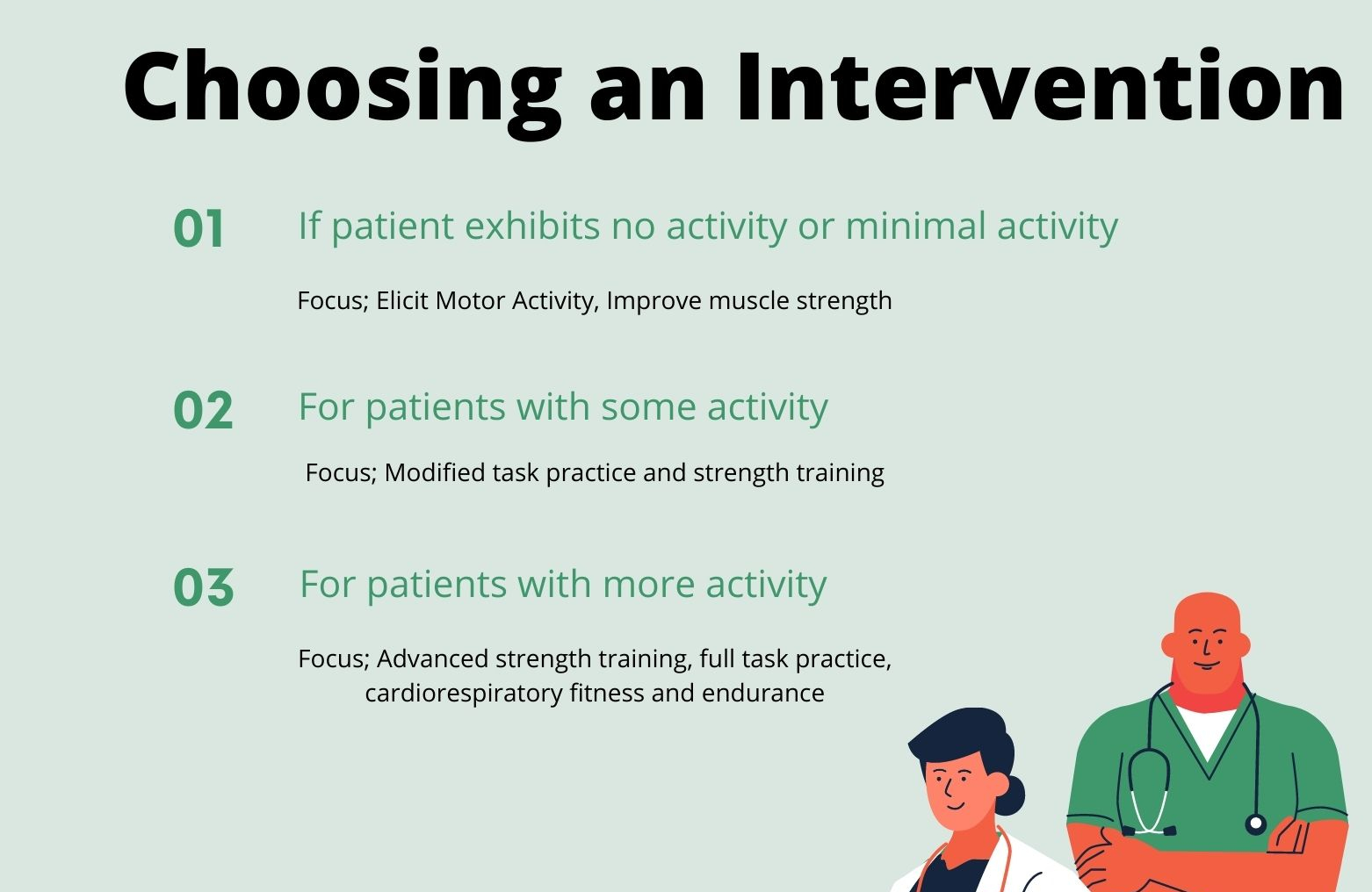
The treatment interventions that the physiotherapist starts with will essentially depend on the patient’s starting level of motor activity.(Kilbride & Cassidy, 2009)

  1. If patient exhibits no activity or minimal activity

Aim: Elicit Motor Activity, Improve muscle strength

  • Modify exercises so that small muscle activity can lead to movement
    • Eliminate gravity
    • Focus on the strong mid-range activity
    • Reduce friction
  • Activation of the extensor activity, weight bearing through standing and sitting, treadmill training with body weight support.
  • Other secondary treatments that aid in eliciting motor activity include, selective electrical stimulation, Electromyogram, biofeedback and mental practice.
  1. For patients with some activity

Aim: Focus on modified task practice and strength training

  •  Strength training through full range and inner range, increase speed, add resistance
  • Task-specific training (part or modified)
  • Consider adjuncts:
    • FES for foot drop,
    • ankle foot orthoses,
    • treadmill training
  • Consider rehabilitation environment and conditions for practice
  1. For patients with more activity;

Focus; Advanced strength training, full task practice, cardiorespiratory fitness and endurance

  • Resistance training
    • Body weight
    • Free weights
    • TheraBand
  • Whole task training, lying to sitting, sit to stand, gait reeducation, reach and grasp.
  • Consider the environment
  • Cardiorespiratory training, walking, stepping, static, cycle ergometer, treadmill training

Improving balance.


Balance depends on sensory inputs from the visual, vestibular, and somatosensory systems. These sensory inputs are integrated and used to control anticipatory and reactive motor output to postural disturbances. (Winstein et al., 2016)

Improving sitting balance.

  1. Trunk training (Criekinge et al., 2019)

Strong evidence supports trunk training for improving dynamic trunk control and sitting balance. Improvements were assessed using the Trunk Impairment scale.

The trunk training involved trunk exercises or other activities targeting the trunk while sitting/lying, to minimize the influence of lower extremity function.

Exercises involved in the trunk training can be performed either on a stable or unstable surface and had to include:

  • Reaching: performed beyond arm’s length to enhance the truncal influence.
  • Core stability: consisting of task-specific movements of the upper and lower parts of the trunk both in the supine and sitting, for example, bridging, dead bug position, planking and so on.
  • Weight shifting: the pelvis shifted the body weight to the paretic side and back, aiming to encourage the experience of weight-bearing on the paretic side during sitting.
  • Sitting balance training.

 Training of sitting balance while reaching beyond arm’s length results to significant improvements in sitting balance. (Veerbeek et al., 2014)

Outcome measure for assessing trunk control and sitting balance

  • Trunk impairment scale
  • Trunk control test
  • Brunel balance assessment

standing balance

  1. Trunk training

Trunk training led to significant improvements in standing balance as assessed using the berg balance scale. (Criekinge et al., 2019)

  • Lower limb strengthening exercises

Outcome measures

Berg Balance Scale

Four Test Balance Scale

Brunel Balance Assessment standing subscale

Romberg test

Improving upper extremity activity


Use of upper extremity is useful in daily life and its disability can lead to lack of independence in ADLs and instrumental ADLs.

  1. Task specific training/Functional task practice.

It’s based on the principle that practice of an action results in improved performance of that action and is focused on learning or relearning a motor skill. Key elements of task-specific training are repeated, challenging practice of functional, goal-oriented activities. All individuals with stroke should receive ADL training tailored to individual needs and eventual discharge setting.

  • Constraint induced movement therapy CIMT

CIMT has been demonstrated to improve upper extremity activity, participation, and quality of life in individuals with baseline ability to control wrist and finger extension compared with usual care. (Winstein et al., 2016) (Veerbeek et al., 2014)

CIMT can be delivered in its original form, 3 to 6 hours/day for 5 days/week for 2 weeks or in a modified version 1 hour/day for 3 days/week for 10 weeks.

  • Bilateral upper limb training

Moderate-quality evidence indicates that unilateral arm training (exercise for the affected arm) may be more effective than bilateral arm training (doing the same exercise with both arms at the same time). (Pollock et al., 2014)

  • Robotic therapy

For the patients with severe paresis on the upper extremity.

  • Mirror Therapy

Moderate quality evidence supporting the use of mirror therapy to improve upper limb function.(Pollock et al., 2014)

  • NMES (neuromuscular electrical stimulation)

NMES can be used for those with minimal ability for volitional muscle activation. It may be beneficial for improving upper extremity activity if used in combination with task- specific training, particularly when applied to the wrist and hand muscles. (Winstein et al., 2016)

NMES for wrist and finger flexors resulted to significant positive effects in motor function of the paretic arm and arm – hand activities and well as in range of motion. (Veerbeek et al., 2014)

  • Mental practice with motor imagery.

Useful as an addition to upper extremity exercise therapies. Longer durations of mental practice appear to produce more benefits. Mental practice of motor actions and/or activities led to improved performance of arm-hand activities. (Veerbeek et al., 2014)

  • Virtual Reality and Video Games

Virtual reality and video gaming have the potential to increase participant engagement and the amount of upper extremity movement practice.  And has positive effects in basic ADL performance. (Veerbeek et al., 2014)

  • Somatosensory stimulation

Interventions aimed at improving somatosensory functions led to significant positive somatosensory and muscle tone. (Veerbeek et al., 2014)

Improving Mobility


  • Trunk training

Trunk training led to significant improvements as assessed using the Tinetti gait subscale and the timed up and go test. (Criekinge et al., 2019)

  • Circuit class therapy

Supervised circuit class training focused on gait and mobility- related functions and activities, in which patients train in groups in various work stations has positive effects for walking distance, balance, walking ability, and physical activity. (Veerbeek et al., 2014)

A 2009 meta-analysis and systematic review concluded that circuit class therapy was a safe and effective method for improving mobility after stroke. (Wevers et al 2009).

  • TENS

Tens for the paretic limb has positive effects for muscle strength and walking ability. Effectiveness of TENS in conjunction with everyday activities for improving mobility, lower extremity strength, and gait speed is uncertain. (Winstein et al., 2016)

  • Intensive, repetitive, walking mobility- task training.

Tailored repetitive practice of walking (or components of walking) should be practiced as often as possible for individuals with difficulty.

  • Ankle foot orthosis for remediable gait impairments i.e. foot drop
  •  Cardiorespiratory exercise plus strengthening interventions.
  • Walking training, either on treadmill or overground effective when combined with conventional rehabilitation.
  • Virtual reality
  • Robotics
  • The effectiveness of neurophysiological approaches (ie, neurodevelopmental therapy, proprioceptive neuromuscular facilitation) compared with other treatment approaches for motor retraining after an acute stroke has not been established. (Winstein et al., 2016)

Prevention and Management of Complications


Prevention of skin breakdown and contractures (Winstein et al., 2016)

  • Regular skin assessments are recommended with objective scales of risk such as the Braden scale.
  • Minimizing or eliminating friction, minimizing pressure, providing appropriate support surfaces, avoiding excessive moisture, and maintaining adequate nutrition and hydration.
  • Regular turning (at least every 2 hours), good hygiene, and the use of special mattresses and proper wheelchair seating to prevent skin injury.
  • Daily stretching of the hemiplegic limbs to avoid contractures, and patients and families should be taught proper stretching techniques to avoid injury and to maximize effectiveness
  • Positioning of the hemiplegic shoulder in maximum external rotation for 30 minutes each day either in bed or in a chair can be useful for preventing shoulder contracture
  • For non-ambulatory patients, the use of a resting ankle splint at night, set in the plantigrade position (ankle at 90° and subtalar neutral) or standing on a tilt table for 30 mins/day in order to prevent contractures

Bladder incontinence

  • Assessment of cognitive awareness of need to void or having voided.
  • Pelvic floor muscle training (after discharge home)
  • Prompted voiding

Preventing DVT.

  • Mobilization
  • Elastic compression stockings had an increase in skin complications and were not associated with any positive effects in reducing incidence of deep venous thrombosis (DVT) (Winstein et al., 2016)

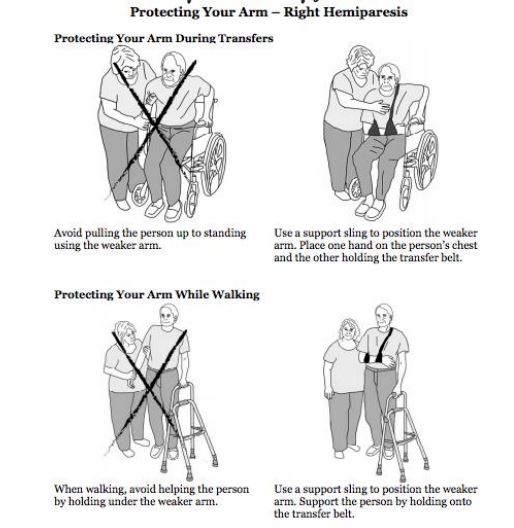
Hemiplegic shoulder Pain

The development of shoulder pain after stroke is associated with shoulder subluxation and motor weakness. Hemiplegic shoulder pain is often multifactorial and can be associated with shoulder tissue injury, abnormal joint mechanics and central nociceptive hypersensitivity. (Winstein et al., 2016)

To prevent;

  1. Patient and family education (ie, range of motion, positioning) is recommended for shoulder pain and shoulder care after stroke, particularly before discharge or transitions in care
  2. Proper positioning.
  3. Maintenance of shoulder range of motion, and motor retraining.
  4. For people in wheelchairs, lap trays and arm troughs might be useful positioning devices to reduce shoulder pain and subluxation.
  5. Aggressive ROM of the shoulder if done improperly could lead to subluxation and pain.
  6. Avoid overhead pulleys.

Management;

  1. Strapping (or taping) techniques led to reduced pain outcomes as measured using the Visual Analogue Scale. (Pandian et.al. 2013) (however change was not clinically significant)
  2. NMES may be considered (surface or intramuscular) for shoulder pain.

Prevention of falls

  • The Berg Balance Scale has demonstrated good sensitivity and specificity in predicting falls in individuals with stroke
  • A community-based progressive group exercise program that includes walking and strength and balance training for 1 hour 3 times a week for participants with mild to moderate hemiparesis.
  • Individuals with stroke and their caregivers receive information targeted to home and environmental modifications designed to reduce falls.

Depression

Exercise appeared to have a small beneficial effect on depressive symptoms across both the subacute and chronic stages of stroke recovery, but these effects were not retained after the exercise was terminated. 236

Winstein et al., (2016) recommends;

  • Patient education about stroke is recommended. Patients should be provided with information, advice, and the opportunity to talk about the impact of the illness on their lives.
  • An exercise program of at least 4 weeks duration may be considered as a complementary treatment for poststroke depression.

Poststroke Osteoporosis

Bone mass density (BMD) and lean tissue mass can reduce in both limbs after stroke. However, changes on the paretic side are more profound. BMD can decrease by >10% in <1 year in the paretic lower limb. (Beaupre et.al 2006)

This combined with the increased risk of falls greatly increases the risk of fractures.

Winstein et al., (2016) recommends increased levels of physical activity are to reduce the risk and severity of poststroke osteoporosis.

Adaptive Equipment, Orthotics And Wheel Chairs


Many patients require assistive devices, adaptive equipment, mobility aids, wheelchairs, and orthoses to maximize independent functioning after stroke.

  • Single-point cane

Has one point of contact and provides a limited improvement in balance and stability.

  • Tripod and quad cane

Has 3 or 4 points of contact and offer more stability. However, they are heavier, bulkier and awkward to use.

A quad cane has been shown to reduce postural sway more than a single-point cane in patients with stroke. (Laufer, 2002)

  • Two-wheeled walkers, 4-wheeled walkers, or rollators.

Require the use of both arms and legs.

Support more body weight than a cane and are more energy efficient

Cannot be used on stairs.

They should be lightweight and foldable for use outside the home. Four-wheeled walkers may require hand-motor coordination to manage handbrakes on a downhill slope

  • Wheel chair

Can be used for the individuals who cannot ambulate safely. The patient often propels the chair by using the less affected hand on 1 wheel and foot on the floor.

  • orthotic device (an orthosis)

Ankle foot orthosis (AFOs) are commonly used by in stroke patients with lower limb motor impairments. AFOs should be used for ankle instability or dorsiflexor weakness. Other types of orthosis can also be prescribed.

Interventions that can be used in low resource settings. (Veerbeek et al., 2014)

Function Intervention
Body functions and structures
Improve motor function legMixed strength & Cardiorespiratory exercises
High intensity practice  
Improve motor function Arm1. Low – intensity modified CIMT     
2. High intensity practice  
Increasing Muscle strength (leg)Water based exercises
Strength training for the paretic leg
Mixed strength and cardiorespiratory exercises
High intensity exercise
Increasing Muscle strength (arm)High intensity training
Reduce Muscle tone legStrength training paretic limb
High intensity practice
Reduce Muscle tone armInterventions for somatosensory functions
High intensity practice
Shoulder abductionPassive range of motion exercises the
Improve gait speedMixed strength and cardiorespiratory exercises
High intensity practice
Increase walking distanceCircuit class training
Mixed strength and cardiorespiratory exercises
Reduce spatiotemporal gait patternsStrength training of the paretic limb
Reduce postural swayStanding balance training with biofeedback
Increase aerobic capacityMixed strength and cardiorespiratory exercises
Cardiorespiratory exercises  
Improve respiratory functionsCardiorespiratory exercises
Improve WorkloadCardiorespiratory exercises
Reduce anxietyOverground walking
High intensity practice
Hand Movement timeSitting balance training
Activities
Improve sitting balanceSitting balance training
Improve sitting and standing balanceBalance training during various activities
Circuit class training
Mixed strength and cardiovascular exercises High intensity practice
Walking abilityCircuit class training
TENS
Arm hand activitiesOriginal CIMT
High intensity mCIMT
Low intensity mCIMT
Mental practice with motor imagery
Improve self-reported quality of arm-hand movement in daily life.Original CIMT
High intensity mCIMT
Low intensity mCIMT  
Improve Basic ADLBalance training during various activities
Low intensity mCIMT
Caregiver mediated exercises
High intensity practice
Increase physical activityCircuit class training Mixed strength and cardio-respiratory exercises
Participation
Quality of lifeMixed strength and cardiorespiratory exercises High Intensity practice
Leisure participationLeisure therapy
Environmental factors
Care giver strainCaregiver mediated exercises

Outcome Measures. (Measuring Improvement)


Impairments

Paresis/strength

  1. Motricity index
  2. Manual Muscle Testing

Tone

  1. Modified Ashworth Scale

Sensorimotor

  1. Fugl – Meyer

Activity

Upper extremity Function

  1. Action Research Arm Test
  2. Box and Block Test

Balance

  1. Berg Balance Test
  2. Functional reach Test

 Mobility

  1. Walking Speed
  2. 6 – minute walk Test
  3. Timed Up and Go test
  4. Functional Ambulation Category
  5. Observational Gait Analysis

Participation

Self-reported Impairments

  1. Stroke Impact Scale which assess;
    • Strength
    • Mobility
    • ADL
    • Hand Function

References


Beaupre GS, Lew HL. Bone-density changes after stroke. Am J Phys Med Rehabil. 2006; 85:464–472. doi: 10.1097/01.phm.0000214275.69286.7a

Connell, L. A., Busse, M., & Lennon, S. (2009). What do acute stroke physiotherapists do ? An exploration of the content of therapy in the UK. (April 2017). https://doi.org/10.1177/0269215509334837

Criekinge, T. Van, Truijen, S., Schröder, J., Maebe, Z., Blanckaert, K., Waal, C. Van Der, & Vink, M. (2019). The effectiveness of trunk training on trunk control , sitting and standing balance and mobility post-stroke : a systematic review and meta-analysis. https://doi.org/10.1177/0269215519830159

Kilbride, C., & Cassidy, E. (2009). The stable acute patient with potential for recovery: stroke, TBI and GBS. In Pocketbook of Neurological Physiotherapy (p. 308). Elsevier Health Sciences.

Laufer Y. Effects of one-point and four-point canes on balance and weight distribution in patients with hemiparesis. Clin Rehabil. 2002;16:141–148

Pandian JD, Kaur P, Arora R, Vishwambaran DK, Toor G, Mathangi S, Vijaya P, Uppal A, Kaur T, Arima H. Shoulder taping reduces injury and pain in stroke patients: randomized controlled trial. Neurology. 2013;80:528–532. doi: 10.1212/WNL.0b013e318281550e.

Pollock, A., Se, F., Mc, B., Langhorne, P., Ge, M., Mehrholz, J., & F, V. W. (2014). Interventions for improving upper limb function after stroke ( Review ). (11).

Veerbeek, J. M., Wegen, E. Van, Peppen, R. Van, Wees, P. J. Van Der, Hendriks, E., Rietberg, M., & Kwakkel, G. (2014). What Is the Evidence for Physical Therapy Poststroke ? A Systematic Review and Meta-Analysis. 9(2). https://doi.org/10.1371/journal.pone.0087987

Wevers L, van de Port I, Vermue M, Mead G, Kwakkel G. Effects of task-oriented circuit class training on walking competency after stroke: a systematic review. Stroke. 2009;40:2450–2459. doi: 10.1161/ STROKEAHA.108.541946

Winstein, C. J., Stein, J., Arena, R., Bates, B., Cherney, L. R., Cramer, S. C., … Rp, A. (2016). AHA / ASA Guideline Guidelines for Adult Stroke Rehabilitation and Recovery. https://doi.org/10.1161/STR.0000000000000098

Physiotherapy in Stroke Rehabilitation ‘Acute/Assessment Phase’

Introduction


The Acute/Assessment phase is the period when the physiotherapist/stroke team are primarily gathering information about the patient identifying impairments and disability, assessing the social and personal context and environment, monitoring response to treatment, etc. In most cases this would be a short-lived stage – a few days – usually following admission, either to an acute ward following the stroke, or transfer to a rehab unit. (Connell, Busse, & Lennon, 2009)

According to the American Stroke Association (ASA)/ American heart association (AHA) guidelines (Ackerson et al., 2018);

  • Early rehabilitation for hospitalized stroke patients should be provided in environments with organized, interprofessional stroke care.
  • A functional assessment by a clinician with expertise in rehabilitation should be performed.
  • Stroke patients should receive rehabilitation at an intensity commensurate with anticipated benefit and tolerance.
  • High-dose, very early mobilization within 24 hours of stroke onset should not be performed because it can reduce the odds of a favorable outcome at 3 months.
  • Stroke patients should be provided with a formal assessment before discharge from acute care hospitalization and these findings should also be incorporated into the care transition as well as the discharge planning process.

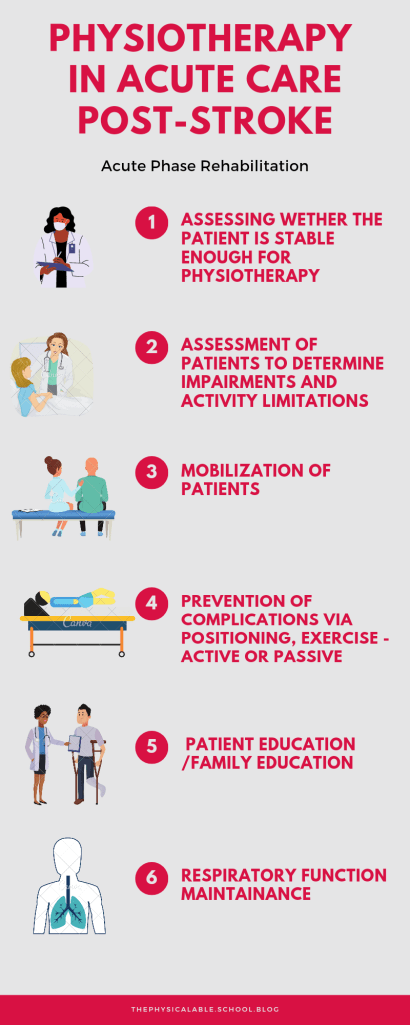
This article will focus on the role played by the physiotherapists in the acute/assessment phase.

Assessing medical stability

  1. Medical notes
  2. Talking to key Members of the multidisciplinary team.

Patient Assessment

  1. Subjective assessment
  2. Objective assessment
    1. Motor assessment
    2. Sensory Assessment
    3. Postural Assessment
    4. Balance and coordination assessment
    5. Gait assessment
    6. Functional assessment

Assessment


Assessing for medical stability

Acute patients may be sedated, paralyzed and intubated with impaired levels of consciousness, they may also be conscious and be able to communicate with or without difficulty. Before deciding whether to continue it is important to determine if the patient is medically stable.

To determine whether the patient is stable;

  • Talk to the key members of the medical team.
  • Check the medical files/notes.

Checking the medical notes will inform you of any risk factors that might be at play. Important information to get from the medical notes will include things like;

  • Type of stroke
  • Planned medical management
  • Risks i.e. re-bleeds or extension of stroke
  • Change in neurological status over the last hours
  • Other pre-existing conditions
  • Cardio-vascular stability
  • ABGs
  • Glucose levels
  • FBC results

Subjective Assessment.

The next step of your assessment will be subjective assessment. In subjective assessment the therapist gathers general information from the medical record, the various members of the multidisciplinary team (MDT) and the patient and/or family.(Kilbride & Cassidy, 2009). Information that has been obtained when assessing for medical stability will also be useful in subjective assessment. In fact, the assessment of medical stability can be said to be part of the subjective assessment.

Interviewing the patient or family

The subjective assessment interview will provide an opportunity for creation of rapport between the therapist and the patient or the family. The interview also allows the physiotherapist to observe/assess various issues such as positioning, postures, communication abilities of the patient, mental status, patient attitudes, orientation and ability to follow instructions. All these factors are relevant in stroke patients.

Important information to get from the patient/family interview includes;

  1. Patients biodata (name, occupation, religion, age)
  2. Past medical history especially history of any neurological disorders
  3. Comorbidities
  4. Drug history including (caffeine, alcohol, smoking)
  5. Specialized equipment that the patient was using, (glasses, hearing aid etc.)
  6. Physical Activity/mobility levels before the stroke
  7. Normal daily routine and leisure activities.
  8. Any history of challenges in mobility, communication, pain
  9. Patients/family expectation of treatment.

The other important factors to check in subjective assessment include patient complaints i.e. pain, stiffness etc.

The physiotherapist should consider certain factors such as depression and fatigue which might influence assessment.

Objective Assessment

The objective assessment consists of observation and examination; it begins with the observation of activity level and voluntary movement control. Objective assessment in the acute care will generally focus on;

  • Identifying the functional activity level of the patient
  • Identifying intact motor abilities
  • Identification of Postural and Movement deficits.
  • Identify Underlying impairments

Identifying the functional abilities of the patient.

In assessing the functional abilities of a patient, the physiotherapist will ask the patient to perform some specific movements of the trunk/limbs or to perform a task During this examination, the therapist should refrain from physically assisting the patient, but may offer verbal cues or demonstration to determine potential for improved performance.

Once the physiotherapist has established the functional abilities that the patient can perform independently and safely, he/she can further assess how much assistance the patient requires to perform other complex activities.

Functional abilities assessed can include;

  1. Changing position in bed (rolling, scooting etc.)
  2. Moving from lying to sitting
  3. Sitting to standing
  4. Sitting abilities (balance)
  5. Standing ability (balance)
  6. Walking ability.
  7. Bed transfers, i.e. bed to chair  

Identifying intact motor abilities

Intact motor abilities refer to the motor functions that the patient can perform, i.e. Abduct left arm – gravity eliminated, Ability to flex/extend fingers left arm

Framework for Objective Assessment

Motor impairment assessment

  • Muscle strength

Stroke is usually associated with loss of muscle strength in the contralateral side of the body. Assessment of this involves the use of Manual muscle testing muscle grades.

  • Tone

In the early stages of stroke muscle tone might be reduced (hypotonia) then later it could be increased (hypertonia) with evidence of spasticity.

Modified ashworth scale is used to assess tone

  • Rigidity

It is the increased resistance to passive movement which is constant throughout the range of movement, occurring throughout the full range of passive movement. Cog wheel or lead pipe.

  • Coordination

Coordination is the ability to use different parts of the body together both smoothly and efficiently and involves the complex coordination of multiple joints and muscles. Lack of coordination suggests cerebellum involvement it is responsible for the integration the sensory motor systems to produce smooth movements.

Assessment tests include; Finger nose test, heel shin test

Sensory Impairment Assessment

  • Light touch

Assessed using some light material i.e. cotton wool comparing sensation on a part of the body with the opposite one.

  • Pain

Assessed using a pin or any other sharp object, comparing pain sensation on the opposite sides.

  • Proprioception

Assessed using the distal proprioception test where the assessor will move joints of the hip, knee ankle and big toe up and down while the patient watches. Then ask the patient to repeat the same movement with eyes closed.

  • Reflexes

Deep tendon reflexes

assessed via use of a patella hammer. In early stages, deep tendon reflexes might be diminished however after some time they are hyper reflexive (exaggerated) indicating upper motor neuron involvement.

Plantar reflex (Babinski’s sign)

Assessed via plantar stimulation

Evidenced by the dorsiflexion of the great toe with or without fanning of the other toes and withdrawal of the leg.

ImpairmentsMethod of Assessment
HemiplegiaSensorimotor assessment
Muscle WeaknessMedical Research Council (MRC) grades
FatigueFatigue severity scale
Loss of dexterityNine-hole peg test Purdue pegboard test
Altered sensationNottingham Sensory Assessment
Proprioceptive lossDistal proprioception test Finger nose finger test Reaching tests
Altered ToneModified Ashworth scale
Cognitive/perceptual impairmentsMini Mental Cognitive test
CoordinationFinger nose test
Visual field impairmentSnellen’s chart
PainVisual Analogue Scale
Swelling/EdemaObservation + tape measure
Emerging habitual posturesObservation
Decreased ROMGoniometry
Cardiovascular deconditioningBorgs rate of perceived exertion
impairments and some of the tools used to assess

Posture Assessment

Posture refers to the attitude assumed by the body either when its stationary or moving. One of the most observable postures in stroke would probably be hemi spatial neglect/ Contraversive pushing.

Gait Assessment

Gait assessment involves asking the patient to walk around (i.e. 10-minute walk test) observing the different gaits cycles and the function of the lower limb while walking.

Analysis of a gait cycle will aid in assessing;

  • Walking aids / orthotics
  • Pattern
  • Distance covered
  • Speed of walking
  • Attention
  • Orientation
  • Memory
  • Cognitive status

Abnormal gait patterns that can be observed in stroke include;

During heel contact/loading phase

  • Limited ankle dorsiflexion
  • Lack of knee flexion

During mid stance

  • Lack of proper knee extension (with excessive dorsiflexion)
  • Stiffening of knee
  • Limited hip extension and ankle dorsiflexion (contracture of soleus) that doesn’t propel body mass forward.
  • Excessive Lateral Pelvic Shift

During late stance/ pre-swing

  • No knee flexion or ankle plantar flexion which are required for push off

During early swing and mid swing

  • Limited knee flexion (35 – 40 degree required for toe and swing clearance in early swing which increases to 60 degrees in mid swing)
  • Toe clearance limited

During late swing

  • Limited knee extension and ankle dorsiflexion which will affect heel contact and weight acceptance.

Functional assessment.

Functional assessment is vital to ensure the patient receives the level of support required on the ward and also provides assistance with goal setting and treatment plans. Specific aspects that are assessed include;

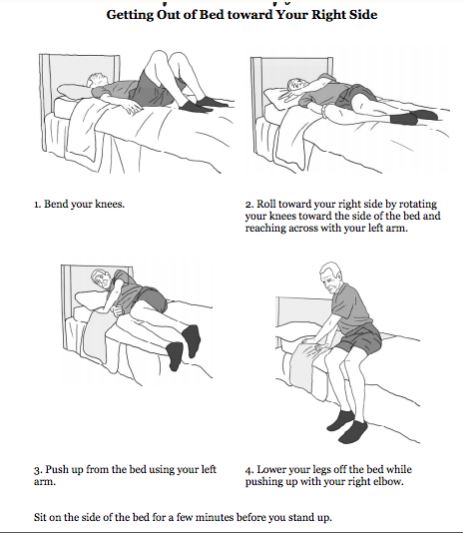
Bed Mobility

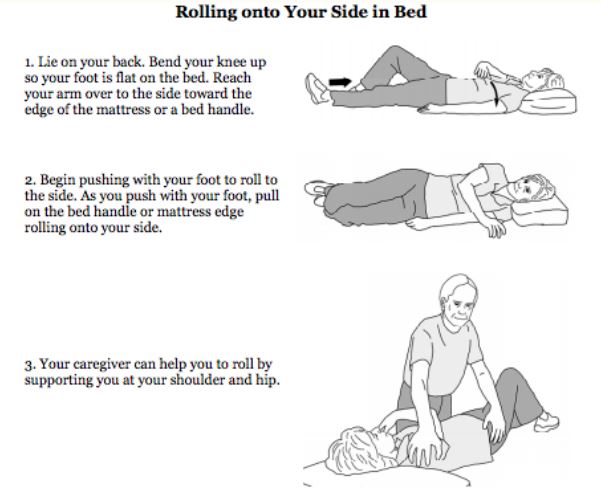
Rolling

Most patients will have difficulty rolling over to the affected side.

Assess if the patient is able to change lying position (rolling) from one side to another safely and independently. (Verbal assistance may be given) If not how much assistance is required.

Getting out of bed

Assess the ability to get out of bed independently or the amount of assistance required to do this safely.

Scooting

Assess the ability of the patient to move over while in bed, through trunk control.

Sitting at the edge of bed

Assess sitting balance and the assistance required.

Movement while sitting and how it affects i.e. reaching out beyond base of support.

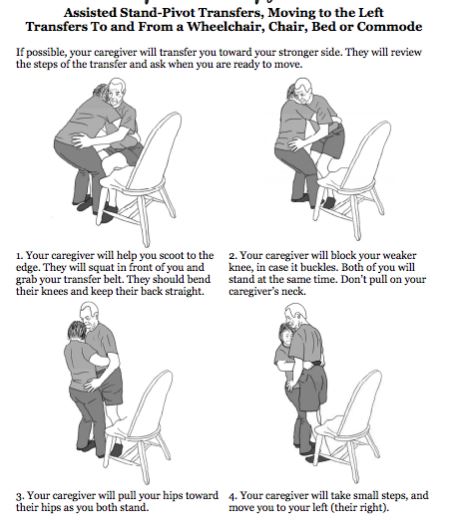
Transfers

Only progress to assessing transfer once patient can easily sit at the edge of the bed easily. This minimizes risk of hospital falls.

Assess the different types of transfers while providing education to care givers on how to perform this safely. Note the amount of assistance required and the devices/postures used.

Other functional assessments that might be performed but aren’t mostly involved in the acute phase include;

  • Upper Limb Function assessment
  • Lower Limb Function assessment
  • Mobility assessment
  • Stairs
ActivityTools/ Measures
General activityBarthel index
Upper limb functionAction Research Arm Test
 Mobility; Bed rollingSleep to SitSit to standTrunk control test Observation (note on assistance required)
Transfers; Bed to chairObservation (note on assistance required)
ADLFunctional independence measure
activity assessment and some of the tools used

Problem list

After assessment the next step is to create a problem list. A problem list contains all the impairments and activity limitations the patient is facing.

Hypothesis

A hypothesis tends to correlate the impairments and the activity limitations i.e. one might hypothesis that the inability of a patient to perform rolling is due to:

  1. Lack of trunk control/ trunk muscle weakness
  2. Impaired proprioception
  3. Paralysis of the upper and lower extremities

Hypothesis is leads to better intervention planning.  

Goal setting


Generally, the overarching goal should be to improve functioning. Small specific goals should be set that works towards the main goal should be set and well defined.

Mark & Levack (2018) point out that in acute care in cases where the patient is overwhelmed by the new disorder and isn’t adjusted well enough to be involved in the creation of goals, the health care professional might take charge. In this case, the overreaching main goal will be independent mobility in three months. Goals set should be meaningful to the patient.

Other short-term specific goals might work towards this goal includes;

  1. Achieving bed mobility (rolling, to either side and side lying to sitting) with minimal support (less than 25% support) in 3 days
  2. Achieving independent bed mobility (rolling, side lying to sitting) (1 week)
  3. Independent balance in static sitting. (2 weeks)
  4. Independent sit to stand (1 month)
  5. Achieving assisted ambulation (walking aid or support from someone) in 1 month.

Interventions


The main aims of acute stroke physiotherapy involves (Connell et al 2009);

  1. Getting the patient out of bed as soon as possible
  2. Facilitating active participation in mobility activities (such as bed mobility, transferring from one seat to another and walking depending on the patient’s level of ability)
  3. Preventing complications such as loss of joint range and cardiovascular deconditioning and disuse atrophy
  4. Encouraging the patient to move their limbs
  5. Respiratory function maintenance (intubated patients)
  6. Patient education

Maintenance of muscle integrity and range of motion

  • Passive/ active assisted range of motion exercises.
  • Positioning
  • Active assisted exercises.

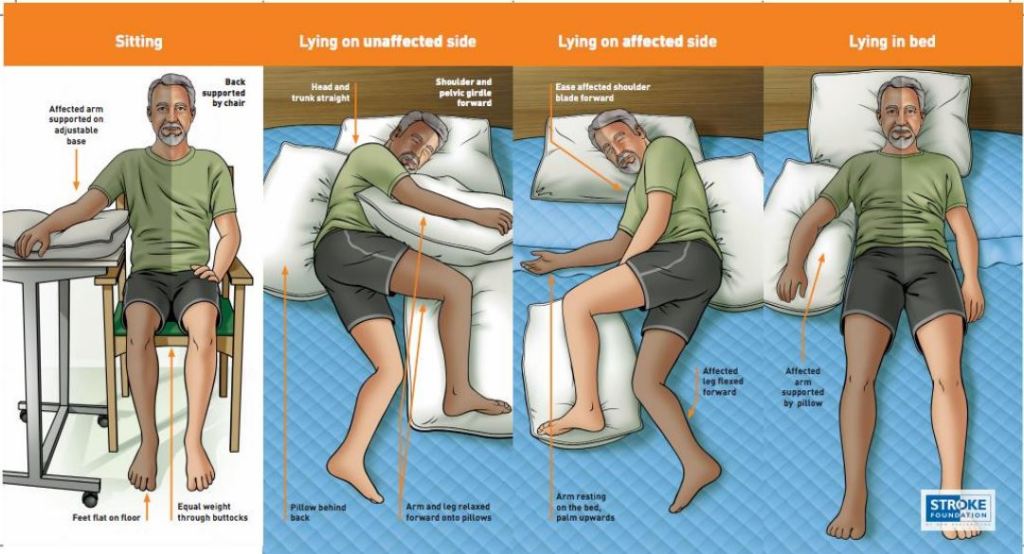
Positioning

Positioning helps in reducing/preventing:

  1. Skin damage
  2. Limb swelling
  3. Shoulder pain
  4. Subluxation
  5. Discomfort
  6. Respiratory complications
  7. It also helps maximize function and maintain soft tissue length.

Positioning recommendations

Chair

  • sitting in an armchair (Arm Support devices such as a Lap Tray may be used to assist with arm positioning for those at risk of shoulder subluxation)
  • Chair positioning with family addressing from hemiplegic side
  • Trunk positioning with blanket roll to maintain upright
  • Hemiplegic arm supported on bedside table
  • Legs in neutral position can use blanket roll to assist
  • Feet flat on floor

Bed

  • Side lying on the unaffected side then side lying on the affected side. (2 hourly turning positions)
  • Elevation of the limb when resting for individuals who are immobile to prevent swelling in the hand and foot (above the heart)
  • Positioning for increased stimulation of the affected side for patients with hemi spatial neglect
  • Head positioning with towel roll
  • Hand with wash cloth roll.
  • Foot positioning with Foothold boots or Skin Care heel float or pillow for positioning

Bed mobility

Rolling over.

Sitting out of bed

Practicing reaching beyond arm’s length while sitting with supervision/assistance should be undertaken for individuals who have difficulty with sitting. Improves balance in sitting (Veerbeek et al., 2014)

When sitting out of bed:

  • Address upright orientation
  • Use foot stool if feet are not touching ground
  • If patient is pushing or leaning to one side, you can sit next to them
  • Eyes open and focusing on vertical object in front of them

Transfers

Standing

For individuals with difficulty standing:

  • Practicing functional task-specific training while standing
  • Walking training that includes challenge to standing balance
  • Providing visual or auditory feedback
  • Lower limb strengthening exercises
  • Consider ankle foot orthosis

Getting the patient out of bed (Mobilization)

Early mobilization includes commencement of sitting, standing and walking training out of bed early after stroke. It helps combat the complications of immobility (bed rest) i.e. cardiovascular deconditioning, deep venous thrombosis etc.

How early is early mobilization? Verbeek et al (2014) defines early mobilization as mobilizing a patient out of bed within 24 hours after the stroke, and encouraging them to practice outside the bed.

Concerns that argue against early mobilization include; raising the patients head early after stroke will impair cerebral blood flow and cerebral perfusion or as in the case of intracerebral hemorrhage it might increase the risk of inducing further bleeding.

The AVERT RCT (A Very Early Rehabilitation Trial) compared high-dose(frequent), very early mobilization with standard-of- care mobility. Its concluded that short bursts of mobilization repeated regularly might best achieve recovery. (Langhorne et al 2017)

Respiratory function maintenance (Intubated patients/unconscious)

  • Positioning
  • Manual techniques (shaking, vibrations, percussions)
  • Manual hyperinflation
  • Suctioning.

Patient Education

Encourage them to actively use of the hemiplegic hand. If unable then utilize the normal hand to move the other hemiplegic hand. Same case with the lower limb.

In dressing advise the patients to start with the hemiparetic limb and end with it.

Encourage firm rubbing of the hemiparetic side when bathing (sensory stimulation)

Prognosis


ADL independenceWalkingDexterity
Younger ageYounger ageInitial severity of
motor impairment and
function, e.g. Presence
of shoulder abduction and finger extension
Less severe
neurological deficits
Less severe sensorimotor dysfunction of
the paretic leg
Better sitting balanceAbsence of homonymous hemianopia
Absence of urinary incontinenceNo urinary incontinence
Limited comorbidityAdequate sitting balance
Consciousness at admissionBetter initial ADL function and ambulation
Better cognitive statusBetter level of consciousness on admission
Absence of depression
(Veerbeek et al 2018)

Outcome measures that can be used in Acute Stroke


NIH stroke assessment tool

Used to assess quantitatively stroke-related neurologic deficits.

It is simple, fast (5 mins) and can be administered by non-neurologists.

Canadian Neurological scale

It is also used to measure stroke deficit

It is also brief (5 mins), valid and reliable.

Motricity index

The motricity index is used to quantitatively assess motor impairment.

It is a brief assessment (5 mins) of motor function of arm, leg and trunk. It has low sensitivity.

References


Ackerson, T., Adeoye, O. M., Brown, M., Demaerschalk, B. M., Hoh, B., Leslie-mazwi, T. M., … Summers, D. V. (2018). AHA / ASA Guideline 2018 Guidelines for the Early Management of Patients With Acute Ischemic Stroke. https://doi.org/10.1161/STR.0000000000000158

Connell, L. A., Busse, M., & Lennon, S. (2009). What do acute stroke physiotherapists do ? An exploration of the content of therapy in the UK. (April 2017). https://doi.org/10.1177/0269215509334837

Kilbride, C., & Cassidy, E. (2009). The stable acute patient with potential for recovery: stroke, TBI and GBS. In Pocketbook of Neurological Physiotherapy (p. 308). Elsevier Health Sciences.

Veerbeek, J. M., Wegen, E. Van, Peppen, R. Van, Wees, P. J. Van Der, Hendriks, E., Rietberg, M., & Kwakkel, G. (2014). What Is the Evidence for Physical Therapy Poststroke ? A Systematic Review and Meta-Analysis. 9(2). https://doi.org/10.1371/journal.pone.0087987

Ackerson, T., Adeoye, O. M., Brown, M., Demaerschalk, B. M., Hoh, B., Leslie-mazwi, T. M., … Summers, D. V. (2018). AHA / ASA Guideline 2018 Guidelines for the Early Management of Patients With Acute Ischemic Stroke. https://doi.org/10.1161/STR.0000000000000158

Connell, L. A., Busse, M., & Lennon, S. (2009). What do acute stroke physiotherapists do ? An exploration of the content of therapy in the UK. (April 2017). https://doi.org/10.1177/0269215509334837

Kilbride, C., & Cassidy, E. (2009). The stable acute patient with potential for recovery: stroke, TBI and GBS. In Pocketbook of Neurological Physiotherapy (p. 308). Elsevier Health Sciences.

Veerbeek, J. M., Wegen, E. Van, Peppen, R. Van, Wees, P. J. Van Der, Hendriks, E., Rietberg, M., & Kwakkel, G. (2014). What Is the Evidence for Physical Therapy Poststroke ? A Systematic Review and Meta-Analysis. 9(2). https://doi.org/10.1371/journal.pone.0087987

Introduction to Neurophysiotherapy

Introduction


A survey done in 2002, (Lennon, 2003), to investigate physiotherapy practices for stroke patients found out that the bobath concept was the preferred approach (67%) followed by an ‘eclectic’ approach (31%)(A mixture of different approaches). The survey also identified four theoretical themes that governed the practice of neurological physiotherapy. These were;

  1. The promotion of normal movement
  2. The control of tone
  3. The promotion of function
  4. The recovery of movement with optimization of compensation

Now, this survey was carried out in the United Kingdom and it would be speculative to assume that the physiotherapists around the world had similar preferences as those in the UK. So, how has physiotherapy evolved over the years? What is the practice of neurophysiotherapy today?

Role of a Neurological Physiotherapist


Physiopedia (2020) defines neurological physiotherapy as a specialist area of physiotherapy focused on treatment of individuals with neurological condition. Neurophysiotherapist’s usually work in close partnership with other members of the multidisciplinary team to rehabilitate the patient. In low income resource settings, i.e. in some low-income/low middle-income countries you might find that only the physiotherapist is part of the rehabilitation team especially after discharge.  

A physiotherapist working in neuro-rehabilitation plays the role of helping the patient experience and relearn optimal movement and functional activity. According to Lennon et al (2018) the two essential components of neurological physiotherapy are:

  • Movement reeducation
  • practice of functional activity

To understand better the role of a physiotherapist helping rehabilitate a patient, we need to understand the neurorehabilitation process.

Lexell & Brogardh, (2014) describe the four principle steps of the neurorehabilitation process;

  1. Assessment
  2. Goal setting
  3. Interventions
  4. Outcome assessment

Assessment

This is where the rehabilitation diagnosis and a description of the consequences of a disease or injury for the person and his or her family is made. Without a proper assessment, it will be difficult to make decision on which interventions to use to help the patient. Assessment is the most important step in the neurorehabilitation process.

A proper assessment will yield;

  1. Impairments
  2. Activity limitations and participation restriction the patient is facing (Functional abilities of the patient)
  3. Factors that might influence patient’s recovery
  4. Prognosis

Read more about the assessment of neurological conditions in physiotherapy here.

Goal setting

During this step, based on the initial assessment, formulate an overarching goal in the rehabilitation plan and set specific short-term and long-term goals together with the patient. For better results when involving the patient and his family in goal setting process, they must have the background knowledge of the condition. Thus, patient education/family education is important aspect to consider.

During this step, goals made should be meaningful to the patient, which is a very important aspect of the goal setting. The best overall goal should be to improve functioning. Sometimes a goal like recovery might not always be feasible i.e. in progressive neurological diseases such as multiple sclerosis or Parkinson’s disease.

Read more about goal setting here.

Intervention

Once the setting of goals is done, the next step in the rehabilitation process is to carry out appropriate interventions. In deciding which interventions to use you need to consider things like the patients’ goals and preferences, evidence base supporting the intervention, cost of the intervention etc.

International Classification of Functioning disability and health (ICF) can be used as reference and framework by which we define our interventions. In particular, we can define if an intervention is aiming at reducing impairment, activity limitation, participation restriction or a barrier in the environment.

To describe it in a better way, any intervention used should be aimed at either;

  1. Elimination

We eliminate a symptom or an environmental barrier, or we reduce the consequences it has for overall functioning. Example, Use of TENS to reduce spasticity of the lower limb in order to improve functioning. (i.e. gait speed)

  • Compensation

Compensation will provide a technic, or strategy, or equipment, or an aid to perform a certain activity in a better way. Example, use of an orthotic device say walking stick, to improve walking.

  • Training

It will include task- specific, repetitive actions aimed at improving a body function, as well as a specific activity. i.e. Cardio-respiratory training to improve endurance/reduce fatigue to help in walking ability.

Read more about some of the interventions used in neurophysiotherapy.

Outcome measurements.

Outcome measurements is the last step in the neurorehabilitation process. Outcome measurements can be subjective i.e. those reported by the patients or objective i.e. those assessed by the physiotherapist.

When integrating the ICF in the outcome measurements we have to link the specific outcomes measurements to the ICF. The outcome measurements should assess improvement in terms of;

  • Improvement of the body function/ body structures
  • Improvement in the activity and participation

To be able to grasp the idea, think about a patient with reduced shoulder range of motion, if your you are to assess the recovery, you could use outcome measures that assess pain (Visual analogue scale) or maybe the range of motion (goniometry) these outcome measures only assess the improvement of body function/structures. If you wanted to measure recovery in terms of activity and participation it would require outcome measures such as action arm reach test.

Read more about outcome measures

References

Lennon, S. (2003). Physiotherapy practice in stroke rehabilitation : a survey. https://doi.org/10.1080/0963828031000069744

Lennon, S., Ramdharry, G., & Verheyden, G. (Eds.). (2018). Neurological Physiotherapy Pocketbook E-Book. Elsevier Health Sciences.

Lexell, J., & Brogardh, C. (2014). The use of ICF in the neurorehabilitation process The use of ICF in the neurorehabilitation process. https://doi.org/10.3233/NRE-141184

Physiopedia , Neurological physiotherapy in Private Practice retrieved from https://www.physio-pedia.com/Neurological_Physiotherapy_in_Private_Practice on 25 September 25, 2020.

Interventions Used in Neurophysiotherapy

Introduction


An emerging evidence base surrounding the issues of neurological rehabilitation means that the role of the physiotherapist in treating and managing neurological conditions is developing. Current research identifies the importance of task-specific, strength and repetitive training. Alongside this the use of novel interventions, such as functional electrical stimulation (FES) and constraint-induced movement therapy (CiMT) are advocated. (Smith, Watson, & Connell, 2013)

In this article we are going explore some of the interventions that are used in neurophysiotherapy. The interventions discussed here are not exhaustive and this article is not meant to be comprehensive rather, it is meant to briefly explain some of the tools that a neurophysiotherapist uses thus giving the reader a brief overview of how physiotherapy contributes to neurological rehabilitation.

Therapeutic Exercise


Therapeutic exercise is the systematic and planned performance of body movements or exercises which aims to improve and restore physical function. Almost all the approaches/interventions used in neurorehabilitation have their foundations laid on exercise/physical activity.

Exercises can be grouped via the basis of many varied reasons i.e. they can be grouped according to aim and purpose;

  1. Range of motion exercises
  2. Muscle performance exercises
  3. Postural exercise
  4. Balance and coordination exercises
  5. Relaxation exercises
  6. Area specific exercises i.e. breathing exercises, circulatory exercises

Benefits of exercise in neurological rehabilitation include;

StrokeBenefits of Cardio-respiratory training
High grade evidence suggests improvement in;
1. Mobility (increased walking speeds, walking capacities and maximal speed)
2. Improvement in physical fitness
Moderate grade evidence suggests it leads to improvement in;
1. Physical function (improved balance)
Benefits of Resistance Training
Moderate grade evidence suggesting resistance training improves;
1. Muscle strength
2. local muscle endurance
3. power output.
Other benefits are;
1. Increase in gait speed and gait endurance
2. Improvement in balance on values measured using the berg balance scale.
     (Saunders et al., 2020)
Cerebral palsyAerobic exercise vs usual care
Low grade evidence suggesting that aerobic exercises:
Had a better positive moderate effect on Gross motor function compared to usual care
Improved the gait speeds (0.09m/s faster than the control group with the usual care.   
(Ryan, Cassidy, Noorduyn, & O Connell, 2017)
Multiple SclerosisEffect of exercise therapy for fatigue in multiple sclerosis
Endurance training, mixed training helps;
– Reduce fatigue without side events. Heine, et al (2015)  

Exercise and physical activities leads to;
1. Improved functional outcomes (mobility, muscular strength)
2. Reduced impairment (fatigue)
3. Improved participation (quality of life)  
Amatya, Khan, & Galea, (2019)

Aerobic exercise;
Induces Functional and Structural Reorganization of the Central nervous system.
(Stellmann et al., 2020)  
Parkinson’s diseaseProgressive Resistance Exercise Training improved
Attention and working memory in non-demented patients with mild-to-moderate Parkinson’s disease.
(David et al., 2015)
Exercise interventions may reduce falls in people with Parkinson’s
(Lai et.al. 2019)  
DementiaExercise interventions have positive effects on people dementia and cognitive impairment,
(Lai et.al. 2019)  
Benefits of exercise in neurological rehabilitation

CIMT (constraint-induced movement therapy)


CIMT is an approach proposed by Edward Taub in the 1980s as a means of treating the upper limb following stroke (Smith et al., 2013). It involves three major components (Morris et al 2006):

  1. Repetitive structured Intensive therapy for the affected limb (up to 6hrs)
  2. Restricting the use of the unaffected limb 90% of the waking hours.
  3. Application of the transfer package (behavioral methods to enhance the transfer of gains made in the clinic to the patients’ daily lives.

This approach appears to prevent learned non-use. Restraining the unaffected arm or the application of the transfer package isn’t effective, CIMT is only effective when further training is involved. CIMT is also only a treatment option for patients who have some volitional movement in their paretic upper limb and especially in the extension direction of one or more fingers and/or thumb (Veerbeek & Verheyden, 2018).

The duration of the original CIMT treatment is each working day for 2 or 3 consecutive weeks.

Evidence supporting use of Constraint induced movement therapy:

Results from a systematic review, (Corbetta, Sirtori, Castellini, Moja, & Gatti, 2015), explain that CIMT appeared to be more effective at improving arm movement than active physiotherapy treatments or no treatment.

Another systematic review, (Mcintyre et al., 2012), assessing CIMT for patients 6 months post stroke also concluded that CIMT to improve UE function is an appropriate and beneficial therapy for individuals who have sustained a stroke more than 6 months previously.

Results from a systematic review, (Hoare et al., 2019) assessing the impact of constraint-induced movement therapy in children with unilateral cerebral palsy were:

  1. CIMT compared with a low-dose comparison group (children had 0 to 25 hours of comparison therapy; and the amount of therapy was much lower than the amount of CIMT)

CIMT may improve bimanual ability (that is, using both hands together; low-quality evidence) and unilateral capacity (that is, one-handed ability using the more affected hand; very low-quality evidence) more than low dose. Three studies reported that a small number of children experienced frustration or refused to wear the constraint, or had reversible skin irritations from casting.

  • CIMT compared with a high-dose comparison group (children had more than 25 hours of bimanual therapy or another form of intensive therapy and the amount was less than CIMT)

CIMT appeared no more effective than a high-dose comparison therapy on bimanual ability (low-quality evidence) or unimanual capacity (very low-quality evidence). Two studies reported that some children experienced frustration from participating in CIMT.

  • CIMT compared with a dose-matched comparison group (children received the same amount of bimanual therapy as the CIMT group).

CIMT appeared no more effective than dose-matched therapy on bimanual ability, unimanual capacity (low-quality evidence) or manual ability (very low-quality evidence). From 15 studies, two children did not tolerate CIMT and three had difficulty getting used to CIMT

Electrotherapy


  1. TENS (Transcutaneous electrical nerve stimulator)

Effect of TENS after stroke

Transcutaneous electrical nerve stimulation can provide additional reduction in chronic post- stroke spasticity, mainly as additional therapy to physical interventions. Especially for low frequency TENS used in the lower extremities (Allein et al., 2018)

There is strong evidence that TENS as an adjunct is effective in reducing lower limb spasticity when applied for more than 30 minutes over nerve or muscle belly in chronic stroke survivors. (Mahmood et al., 2018)

Electrical sensory input can contribute to routine rehabilitation to improve early post-stroke lower-extremity impairment and late motor function, with no change in spasticity. Prolonged periods of sensory stimulation such as TENS combined with activity can have beneficial effects on impairment and function after stroke. (Sharareh, Shuster, & Bishop, 2018)

The results support the use of repeated applications of TENS as an adjunct therapy for improving walking capacity and reducing spasticity in stroke survivors. (Kwong & Ng, 2017)

Effect of TENS in Multiple Sclerosis

Decrease in low back pain scores on the Visual Analogue Scale. However, the decrease in scores was not statistically or clinically significant. (Bhasker Amatya, Young, & Khan, 2018)

Eight hour TENS application (100 Hz and 0.125 ms pulse width) daily led to a significant reduction in muscle spasm. (B Amatya, Khan, L, Demetrios, & Dt, 2013)

TENS in Spinal Cord Injury

TENS was effective in reduction of pain in spinal cord injury when compared to sham treatment. (Harvey, Glinsky, & Bowden, 2016)

  • Functional Electrical Stimulation (FES)

Functional Electrical Stimulation (FES) uses electrical pulses to stimulate motor neurons or denervated muscle fibers directly to elicit a contraction during a functional activity (Berkelmans, 2008).

Common uses in rehabilitation include:

  1. FES Cycling

FES Cycling 2-3 times per week for 10 weeks in individuals with a spinal cord injury showed increased total cycling power, endurance, lean muscle, and improvements in lower extremity ASIA Impairment Scales Scores for both Motor and Sensory. (Griffin, et al 2009)

  • FES therapy for upper limb

FES can be used to prevent or reduce shoulder subluxation early after stroke. (Vafadar, Côté, & Archambault, 2015)

  • FES for foot drop

FES used for foot drop has a positive initial and ongoing effect on gait speed in short walking tests (Miller et al., 2016)

Action Observational Therapy


Action Observation Therapy (AOT) is a top down approach and is grounded in basic neuroscience and the recent discovery of the mirror neuron system (MNS). The mirror neuron system (MNS) is a part of the neural system that is activated when animals or humans execute meaningful actions or observe similar actions performed by others. (Kim, An, & Yoo, 2018)

Comprises of two phases (Buccino, 2013)

  • Observation phase: during this phase, patient is asked to carefully observe the given video.
  • Execution phase: during this phase, patient is asked to perform the observed motor task at the best of his/her ability

In a clinical study assessing the effect of group based rehabilitation combining action observation therapy with physiotherapy on freezing of gait in Parkinson’s. (Pelosin et al., 2018) the study found out that Action observation therapy group-based training is feasible and effective on Freezing of gait and motor performance in Parkinson’s disease patients and may be introduced as an adjunctive option in Parkinson’s disease rehabilitation program.

Mirror therapy


Mirror therapy is based on visual stimulation. During mirror therapy, a mirror is placed in the person’s midsagittal plane, thus reflecting the non-paretic side as if it were the affected side. By this setup, movements of the non-paretic limb create the illusion of normal movements of the paretic limb.

The key result from a systematic review investigating mirror therapy after stroke was that at the end of treatment, mirror therapy moderately improved movement of the affected upper and lower limb and the ability to carry out daily activities for people within and also beyond six months after the stroke. Mirror therapy also reduced pain after stroke, but mainly in people with a complex regional pain syndrome. (Thieme et al., 2018)

Virtual reality


Virtual reality (VR) is a computer-based, interactive, multi-sensory simulation environment. It can be categorized into two, immersive and non-immersive. In immersive VR systems, the user feels as though they are actually present in the computer-generated world. Non-immersive VR systems still require the user to interact with the environment but provide a lesser feeling of ‘presence’ within the virtual world. (Smith et al., 2013)

 According to (Hornby et al., 2020)  virtual reality based training to ambulatory individuals greater than 6 months following acute-onset CNS injury to improves walking speed or distance.

Kate E Laver et al., (2017) found evidence that when used alone virtual reality and interactive video gaming was not more beneficial than conventional therapy approaches in improving upper limb function for post stroke patients. However, virtual reality may be beneficial in improving upper limb function and activities of daily living function when used as an adjunct to usual care (to increase overall therapy time).

In reviewing the evidence as to whether virtual reality is effective in improving hand functions for children with cerebral palsy, Rathinam et al., (2018) concluded that the role of virtual reality in improving hand function for children with cerebral palsy is unclear however if used as an addition to treatment, there exist some support.

In people with Parkinson’s Disease, Virtual reality has been found to be effective than other passive interventions improving, stride length, gait speed, balance and activities of daily living.(Triegaardt & Han, 2019)

Robotics


Robotic devices have been developed to assist with labor-intensive walking training that focuses on producing more normal walking patterns after chronic CNS injury. Strong evidence indicates that walking training with robotics compared with walking training alone does not result in greater walking speed or distance in people in the chronic stages following stroke, SCI, and TBI. (Hornby et al., 2020). However, all participants included in these studies were likely able to ambulate without the use of robotic assistance.

References


Allein, M., Marcolino, Z., Hauck, M., Stein, C., Pagnussat, A. D. S., Della, R., … M, R. Della. (2018). Effects of transcutaneous electrical nerve stimulation alone or as additional therapy on chronic post-stroke spasticity : systematic review and meta-analysis of randomized controlled trials. Disability and Rehabilitation, 0(0), 1–13. https://doi.org/10.1080/09638288.2018.1503736

Amatya, B, Khan, F., & Galea, M. (2019). Rehabilitation for people with multiple sclerosis: an overview of Cochrane Reviews (Review). https://doi.org/10.1002/14651858.CD012732.pub2.www.cochranelibrary.com

Amatya, B, Khan, F., L, L. M., Demetrios, M., & Dt, W. (2013). Non pharmacological interventions for spasticity in multiple sclerosis ( Review ). (2).

Amatya, Bhasker, Young, J., & Khan, F. (2018). Non-pharmacological interventions for chronic pain in multiple sclerosis (Review). https://doi.org/10.1002/14651858.CD012622.pub2.www.cochranelibrary.com

Berkelmans R. Fes cycling. Journal of Automatic Control. 2008;18(2):73-6

Buccino G. Action observation treatment: a novel tool in neurorehabilitation. Phil. Trans. R. Soc. B. 2014 Jun 5;369(1644):20130185.

Corbetta, D., Sirtori, V., Castellini, G., Moja, L., & Gatti, R. (2015). Constraint-induced movement therapy for upper extremities in people with stroke ( Review ). (10). https://doi.org/10.1002/14651858.CD004433.pub3.www.cochranelibrary.com

David, F. J., Robichaud, J. A., Leurgans, S. E., Poon, C., Kohrt, W. M., Goldman, J. G., … Corcos, D. M. (2015). Exercise Improves Cognition in Parkinson ’ s Disease : The PRET-PD Randomized , Clinical Trial. 30(12), 1657–1663. https://doi.org/10.1002/mds.26291

Harvey, L. A., Glinsky, J. V, & Bowden, J. L. (2016). The effectiveness of 22 commonly administered physiotherapy interventions for people with spinal cord injury : a systematic review. (January), 1–10. https://doi.org/10.1038/sc.2016.95

Heine, M., I, V. D. P., Mb, R., Eeh, V. W., & Kwakkel, G. (2015). Exercise therapy for fatigue in multiple sclerosis ( Review ). (9). https://doi.org/10.1002/14651858.CD009956.pub2.www.cochranelibrary.com

Hoare, B. J., Wallen, M. A., Thorley, M. N., Jackman, M. L., Carey, L. M., & Imms, C. (2019). Constraint-induced movement therapy in children with unilateral cerebral palsy (Review). https://doi.org/10.1002/14651858.CD004149.pub3.www.cochranelibrary.com

Hornby, G., Reisman, D. S., Ward, I. G., Scheets, P. L., Miller, A., & Haddad, D. (2020). Clinical Practice Guideline to Improve Locomotor Function Following Chronic Stroke , Incomplete Spinal Cord Injury , and Brain Injury (Vol. 44). https://doi.org/10.1097/NPT.0000000000000303

Kate E Laver, Lange, B., George, S., Deutsch, J. E., Saposnik, G., & Crotty, M. (2017). Virtual reality for stroke rehabilitation ( Review ). (11). https://doi.org/10.1002/14651858.CD008349.pub4.www.cochranelibrary.com

Kim, D. H., An, D.-H., & Yoo, W.-G. (2018). Effects of live and video form action observation training on upper limb function in children with hemiparetic cerebral palsy un co rre ed pr oo f v er un co rre ct ed pr oo f v. 1, 1–7. https://doi.org/10.3233/THC-181220

Kwong, P. W. H., & Ng, G. Y. F. (2017). Transcutaneous electrical nerve stimulation improves walking capacity and reduces spasticity in stroke survivors : a systematic review and meta-analysis. (November). https://doi.org/10.1177/0269215517745349

Lai, C., Chen, H., Liou, T., Li, W., & Chen, S. (2019). Exercise Interventions for Individuals With Neurological Disorders. 98(10), 921–930. https://doi.org/10.1097/PHM.0000000000001247

Mahmood, A., Veluswamy, K., Hombali, A., Mullick, A., Manikandan, N., & Solomon, J. M. (2018). Effect of Transcutaneous Electrical Nerve Stimulation on Spasticity in Adults With Stroke : A Systematic Review and Meta-analysis. Archives of Physical Medicine and Rehabilitation. https://doi.org/10.1016/j.apmr.2018.10.016

Mcintyre, A., Viana, R., Janzen, S., Mehta, S., Pereira, S., & Teasell, R. (2012). Systematic Review and Meta-Analysis of Constraint-Induced Movement Therapy in the Hemiparetic Upper Extremity More Than Six Months Post Stroke. 19(6), 499–513. https://doi.org/10.1310/tsr1906-499

Miller, L., Mcfadyen, A., Lord, A. C., Hunter, R., Paul, L., Rafferty, D., … Mattison, P. (2016). Functional Electrical Stimulation for foot drop in Multiple Sclerosis: A Systematic Review and Meta-Analysis of the impact on gait speed. ARCHIVES OF PHYSICAL MEDICINE AND REHABILITATION, (2017). https://doi.org/10.1016/j.apmr.2016.12.007

Morris, D.M., Taub, E., Mark, V.W., 2006. Constraint-induced movement therapy: characterizing the intervention protocol. Eur. Medicophys. 42 (3), 257–268.

Pelosin, E., Barella, R., Bet, C., Magioncalda, E., Putzolu, M., Biasio, F. Di, … Avanzino, L. (2018). Clinical Study Effect of Group-Based Rehabilitation Combining Action Observation with Physiotherapy on Freezing of Gait in Parkinson ’ s Disease. 2018.

Rathinam, C., Mohan, V., Peirson, J., Skinner, J., Subash, K., & Kuhn, I. (2018). Effectiveness of virtual reality in the treatment of hand function in children with cerebral palsy : A systematic review. Journal of Hand Therapy. https://doi.org/10.1016/j.jht.2018.01.006

Ryan, J., Cassidy, E., Noorduyn, S., & O Connell, N. (2017). Exercise interventions for cerebral palsy ( Review ). (6). https://doi.org/10.1002/14651858.CD011660.pub2.www.cochranelibrary.com

Saunders, D., Sanderson, M., Hayes, S., Johnson, L., Kramer, S., Dd, C., … Ge, M. (2020). Physical fitness training for stroke patients ( Review ). https://doi.org/10.1002/14651858.CD003316.pub7.www.cochranelibrary.com

Sharareh, Q., Shuster, J. J., & Bishop, M. D. (2018). ScienceDirect Adding electrical stimulation during standard rehabilitation after stroke to improve motor function . A systematic review and meta-analysis. Annals of Physical and Rehabilitation Medicine, 1–6. https://doi.org/10.1016/j.rehab.2018.06.005

Smith, C., Watson, A., & Connell, L. (2013). Neurological physiotherapy. In Tidy’s Physiotherapy (15 th).

Stellmann, J., Maarouf, A., Schulz, K., Baquet, L., Ketels, G., Besson, P., … Guye, M. (2020). Aerobic Exercise Induces Functional and Structural Reorganization of CNS Networks in Multiple Sclerosis : A Randomized Controlled Trial. 14(June), 1–11. https://doi.org/10.3389/fnhum.2020.00255

Thieme, H., Morkisch, N., Mehrholz, J., Pohl, M., Behrens, J., Borgetto, B., & Dohle, C. (2018). Mirror therapy for improving motor function after stroke ( Review ). (7). https://doi.org/10.1002/14651858.CD008449.pub3.www.cochranelibrary.com

Triegaardt, J., & Han, T. S. (2019). The role of virtual reality on outcomes in rehabilitation of Parkinson ’ s disease : meta-analysis and systematic review in 1031 participants.

Vafadar, A. K., Côté, J. N., & Archambault, P. S. (2015). Effectiveness of Functional Electrical Stimulation in Improving Clinical Outcomes in the Upper Arm following Stroke : A Systematic Review and Meta-Analysis. 2015.

Veerbeek, J. M., & Verheyden, G. (2018). Stroke. In Physical Management for Neurological Conditions (4 th, p. 144). Elsevier.

Outcome Measures

Introduction


Using standardized measurement tools has been regarded is an indication of proper physiotherapy practice (Stokes, 2009).  In fact, the use of standardized outcome measures is recommended as a way of promoting evidence- based practice and is part of good clinical practice (Smith, Watson & Connell, 2013). While measurements tools are used in assessments in physiotherapy they are not just limited to assessment. Some of these tools are used to measure other aspects of practice. Verheyaden & Tyson, (2018) states that outcome measurements is just one contribution that measurement tools can make to clinical practice and there are other ways that these tools can be used.

What are standardized outcome measures?

Let’s say you are helping a stroke patient improve the range of motion of his shoulder, so you design an intervention plan. However, one thing is still left, how are you to gauge that you are making some progress? Maybe through goniometry, right? In this case goniometry is the outcome measure. You will use the measurements, before and after the treatment to determine progress. Simply speaking, the outcome measure will help you compare before and after treatment.

As the overarching goal is to improve functioning, outcome measures should capture recovery and restoration, and the results of the interventions we use (Lexell & Brogardh, 2014). The benefits of using outcome measures include; providing a common language to define patients’ problems, and for proper communication between the multidisciplinary team. Helping promote person centered care and helping in decision making and treatment planning.

The ICF and outcome measures.

The problems that neurological therapy aims to treat are covered within the ICF and can be used as a basis to understand the patients’ difficulties and identify appropriate measurement tools. Outcome measures often focus on impairments (as defined in the ICF) and can be both objective (i.e. performed by staff) and self-report (i.e., based on the patient’s subjective perception)(Lexell & Brogardh, 2014).

Factors to consider when choosing an outcome measure.


The purpose of the measure.

To properly understand your purpose of your measure you should understand:

  • Why do you want to evaluate practice?
  • What specifically can be measured to meet your purpose?
  • What type of information will you collect?
  • When will the information be collected?
  • What decisions might be made using the information collected?

You can use the ICF framework to guide you on what you are aiming to measure. Components of the framework such as impairments, activity limitations and participation restrictions can be very good guides.

Clinical utility of a measure

To be useful within the clinical setting the measure should be simple, easy to use. It should also be cost effective as some of the measurement tools might require payment before use.

Scientific properties of a measure

The measure should possess these scientific properties:

  1. Reliability

Reliability refers to the stability of the scores obtained when a tool is used to take a measurement more than once. Basically, how reliable will the tool be if it’s used by another therapist, interrater reliability, or if used by the same therapist, intrarater reliability, to assess the same patient/s.

The question being:

  • Do I know the rate of error detected with scores?

2. Validity

The term validity refers to consideration of whether (or to what extent) a measurement tool measures the construct (or issue/ idea) it intends to measure. This is sometimes described as ‘Does it do what it says on the label?

The question being:

  • Does it measure what I want it to measure?

Important aspects while assessing validity.

Sensitivity

Sensitivity is the ability of a tool to correctly predict whether a diagnosis, outcome or event is present (i.e. the number of true positives).

Specificity

Specificity is the ability of a tool to correctly predict whether a diagnosis, outcome or event is not present.

Positive predictive value

Positive predictive value is the proportion of evaluated subjects with a positive test result and who have the disease, outcome or event (i.e. the proportion of true positives).

Negative predictive value

Negative predictive value is the proportion of evaluated subjects with a negative test result and who do not have the disease, outcome or event (i.e. the proportion of true negatives)

3. Responsiveness

Responsiveness is the ability to measure clinically meaningful or important change. The question being:

  • what is the minimum meaningful clinical change can it detect?

4. Standardization.

Standardization procedures provide clear, explicit instructions on how to undertake every part of the measure. It is advantageous to choose a measure that is widely known (for example the Medical Research Council muscle strength grading system)

5. Other factors to consider are:

  1. The time it takes to complete the measure
  2. Difficulty in using the measure
  3. Resources or specialized tools/experience needed to carry out the measure.
ImpairmentsMeasures
Ataxia/CoordinationScale for the assessment and rating of ataxia (SARA)
Finger nose test Gagnon et al (2004)
Muscle tone impairments/ spasticityModified ashworth scale (validity and responsiveness limited (Verheyden & Tyson, 2018))
Arm Activity Measure
Leg Activity Measure
FatigueFatigue severity scale
Neurological Fatigue Index (NFI) for multiple sclerosis, Mills et al 2010)
Muscle weaknessMotricity Index (Wade 1992)
Sensation impairmentsRivermead Assessment of Somatosensory Perception (RASP),Tyson and Busse (2009)
Shoulder subluxationmanual palpation
Example of outcome measures you can use for impairments assessment in neurological physiotherapy.
Activity limitationsMeasures
WalkingSix-Minute (or Two-Minute) Walk Test.
5-m or 10-m walk test
FallsForward Reach and Arm Raise Tests (in sitting & standing)
Timed Up and Go
Upper limb function (grip)Nine Hole Peg Test
Example of outcome measures you can use to assess activity limitations in neurological physiotherapy.

References


Fawcett, A. J. L. (n.d.). Principles of Assessment and Outcome Measurement for Occupational Therapists and physiotherapists.

Gagnon, C., Mathieu, J., Desrosiers, J., 2004. Standardized finger-nose test validity for coordination assessment in an ataxic disorder. Can. J. Neuro. Sci. 31 (4), 484–489

Lexell, J., & Brogardh, C. (2014). The use of ICF in the neurorehabilitation process The use of ICF in the neurorehabilitation process. https://doi.org/10.3233/NRE-141184

Mills, R.J., Young, C.A., Pallant, J.F., et al., 2010. Development of a patient reported outcome measure scale for fatigue in multiple sclerosis: The Neurological Fatigue Index (NFI?MS). Health Qual. Life. Outcomes. 8, 22.

Smith, C., Watson, A., & Connell, L. (2013). Neurological physiotherapy. In Tidy’s Physiotherapy (15 th).

Stokes, E. K. (2009). Outcome measurement. In Pocketbook of Neurological Physiotherapy (pp. 191–201). https://doi.org/10.1016/C2009-0-37172-X

Stokes, E. K. (2010). Rehabilitation Outcome Measures. https://doi.org/10.1016/B978-0-443-06915-4.00001-2

Tyson, S., Busse, M., 2009. How many body locations need to be tested when assessing sensation after stroke? An investigation of redundancy in the Rivermead Assessment of Somato sensory Perception. Clin. Rehabil. 23, 91–95

Tyson, S., Watson, A., Moss, S., Troop, H., Dean-lofthouse, G., Jorritsma, S., & Shannon, M. (2008). Development of a framework for the evidence-based choice of outcome measures in neurological physiotherapy. 30(2), 142–149. https://doi.org/10.1080/09638280701216847

Verheyden, G., & Tyson, S. F. (2018). Measurement Tools. In Physical Management for Neurological Conditions (pp. 77–88).

Wade, D.T., 1992. Measurement in Neurological Rehabilitation. Oxford University Press, Oxford.

Yoward, L. S., Doherty, P., & Boyes, C. (2008). A survey of outcome measurement of balance , walking and gait amongst physiotherapists working in neurology in the UK. 94, 125–132. https://doi.org/10.1016/j.physio.2007.08.005

How to Access Educational Physiotherapy Resources.

Introduction


Accessing physiotherapy educational resources can be a hustle, depending on where you live. In low middle-income and low-income countries being able to access even a few physiotherapy books is a kind of luxury. Thankfully the internet exists and with it comes the easiness’ of accessing resources that you may need.

In this article I will share the resources that I use to access physiotherapy books and research papers for free. I understand that a moral dilemma exists. The writers of these books and research papers have them on sale for particular reasons and using the internet to get them for free has its negative impacts.

These resources will be divided into two groups:

  • Resources to access books
  • One resource to access published research articles that might be locked or that require some kind of payment.

All these resources can be accessed freely as long as you have a working internet connection.

Resources to access books


  1. Telegram
  2. Z- Library
  3. PDF drive

Telegram

What you will need?

  1. Telegram app
  2. An account.

Telegram is a smartphone app that allows its users to share information. It’s similar to WhatsApp but can allow its users to share large files such as books, movies etc. To use telegram in download books;

  1. Download the telegram app from play store/app store.
  2. Create an account if you don’t have one
  3. Search for the groups, TLS PHYSIOTHERAPY BOOK BANK or Physical Therapy and Rehabilitaion, Join the groups.
  4. Use the search function on each group to search for the book you want.

Z-Library

Z-library describes itself as the largest ebook library in the world. To use Z-Library;

  1. Enter z-lib.org in your browser, either in your pc or smartphone.
  2. Choose whether you want a book or an article
  3. Search for the book or the article you would like.
  4. Follow the steps to download.
Z-library

PDF drive

To use PDF drive;

  1.  enter pdfdrive.com on your browser alternatively, search pdf drive in google.
  2. Use the search button to search for the book or article you want.
  3. Follow the steps to download.
PDF drive

Resources to access published Research articles


Sci-Hub

Using sci-hub to download for research papers is a bit more complex than downloading books. In order to download a research paper in sci-hub you will need to have its DOI number/link. This number uniquely identifies each research paper ensuring that you download just the paper you want.

So how do you obtain a papers DOI number?

Assuming you are using PubMed to do your research, click on any paper you are interested in, check around the page to see if you see ‘DOI’ written somewhere. If not, check if the details of the paper are hidden. If you see the DOI number/link copy it.  If you are using google scholar or if you are in a page detailing the contents of the paper all you need is to look for the DOI number/link. It is mostly in details section of a paper.

Use your browser to navigate to sci-hub.tw then enter the DOI number and click the open button. The research paper will begin downloading or you might be prompted to save it.  Basically, all you need is the DOI link or number then you can use it to download the research paper.

Sci Hub

Goal Setting in Neurophysiotherapy

Introduction


According to Lexell & Brogardh, (2014) the rehabilitation process comprises of four steps:

  1. Assessment
  2. Goal Setting
  3. Interventions
  4. Outcome Measurement.

Assessment has been discussed in a different article. This article will focus on the second step, goal setting, in the neurorehabilitation process.

Goal setting is used as a tool to improve the quality of the rehabilitation process (Schut & Stam, 1994). A rehabilitation goal is a desired future state to be achieved by a person with a disability as a result of rehabilitation activities. (Mark & Levack, 2018). These goals are actively selected, intentionally created, have purpose and are shared in cases where possible.

According to (Mark & Levack, 2018) once set, rehabilitation goals ought not be left forgotten in a patient’s clinical notes but used in some way to guide clinical decision making, to encourage patients in their efforts, or to help patients, family members and health professionals reflect on process or progress.

Benefits of goal setting.

  • Creates common objectives which are essential in teamwork.
  • Goal setting has a communication impact, it gives the environment for proper communication between the rehabilitation team and also with the patient and the family.
  • Goal setting has a motivational aspect. Proceeding towards or reaching a goal may give the patient, the individual team member and the team as a whole, the satisfaction needed to get and stay motivated.
  • Goal setting is important in the assessment of the rehabilitation outcome.

Writing Person-Centered Goals


Goals are only effective if they are considered desirable by the subject (Wade, 2009).

Setting goals involves two key activities:

  1. Goal Selection
  2. Goal Documentation

Goal selection

When using the person-centered approach to goal setting the goals are meaningful and relevant to the patient. (Melin, Nordin, Feldthusen, & Danielsson, 2019). This means that setting goals is not associated with the traditional measures of pain, range of motion or strength. The goals should be seen more as hopes, aspirations, and dreams rather than dichotomized into realistic and unrealistic goals.

For proper selection of person-centered goals, the patient and the family have to be involved in the process. They should also have information about the prognosis and the expected level of difficulty for specific goals but still should be allowed to set their preferred goals even though they might be challenging or highly ambitious.

The physiotherapist also needs to have information about the context of the persons life outside the health system and before injury or illness.

In differentiating between long term and short-term goals the key concept is identifying short-term steps that need to be achieved to make progress towards some much longer-term, desired outcome.

Goal Statement

(Randall & Mcewen, 2000) have described an approach to writing patient-centered functional goals. It involves writing down the statements in a way that answers these five questions.

  • Who?
  • Will do what?
  • Under what conditions?
  • How well?
  • By when?

‘Who?’ should almost always be the patient. Mark & Levack, (2018) comments that writing all goal statements with the patient as the subject of the goals helps rehabilitation teams avoid documenting objectives which actually describe tasks for health professionals (or others) to perform rather than outcomes for the patient to achieve.

‘Will do what?’ should describe the function or activity that the patient is aiming to achieve at the end of therapy

‘Under what conditions?’ describes the environment the goal is to be attained.

‘How well?’ provide prompts to specify the quality of performance.

‘By when?’ describes the time/period constraint.

Example: Mr. A, the patient, will walk 500 meters using a walking aid, indoors, on the six-minute walk test within 14 days.

Other methods for goal statement include;

  1. SMART approach

Goals are set to in a way that is; specific, measurable, achievable/assignable, realistic/ relevant and timed. (Jh, Eerdt, Botell, & Wade, 2009).

  1. MEANING approach

This approach can be divided into three stages: identifying meaningful goals; connecting to concrete target goals; and bridging the intention- implementation gap. McPherson, Kayes, and Kersten (2015)

Goal setting in ever changing clinical conditions.


Clinical conditions change, patients get better or at other times get worse i.e. in neurodegenerative conditions. This means that one has to adapt his approach to goal setting in the different stages of care.

A good example of this is the example given in (Mark & Levack, 2018) which details goal setting throughout the rehabilitation period for a patient suffering from stroke. Below, I have given a summary.

Acute rehabilitation phase

In the acute phase of illness after a moderate to severe stroke, the thing that patients and families need most is strong, confident, competent health professional leadership. What most patients generally do not need at this point in recovery (immediately after a life-threatening event) is to be asked open-ended questions about their desired outcomes from rehabilitation a year hence.

So, at this phase what should be done about person-centered care? Fiduciary care can be used. Mark & Levack (2018) describe fiduciary care as involving the health professionals taking charge of decision making over a patient’s health, well-being and treatment during this time of adjustment.  Further they explain that during this period the major goal that should be aimed at should be independent mobility. If the patient’s prognosis doesn’t look too promising this information should be explained to the patient but still while maintaining the optimism.

Post-acute Inpatient Rehabilitation

Post-acute inpatient rehabilitation can be said to start once a person is medically stable and beginning to work towards returning to the community.

This ‘goal’ is usually about a series of achievable, time-bound targets related to a minimum level of functional performance required for community living: walking, talking, eating, toileting, self-cares, arm/hand function and so on. Goals for inpatient rehabilitation can (and should) be individualized to better match the life context and personal values of each person with stroke, but overall, the goals of inpatient rehabilitation will necessarily draw on similar activities required for community living.

The post-acute stage of rehabilitation is the time when health professionals need to begin relinquishing some control over decision making. At some point it might become increasingly clear that a patient is not going to achieve his or her best possible desired outcome. When this happens, revision of goals is likely to be necessary. A goal for some form of walking with aid might need to be replaced by a goal to achieve mobility by use of transfers and a wheelchair.

In this context, opportunities for patients to discuss their disappointment with their recovery ought to be provided and acknowledged. However, patients in this situation also ought to be encouraged to find ways to engage with previously meaningful social roles and occupational pursuits in a modified capacity.

Post-Acute Community-Based Rehabilitation

The period shortly after discharge from hospital is one full of new challenges for people with stroke. Goal setting at this stage helps provide a road map for learning to live with stroke in the community. In early community-based rehabilitation, goal setting should move from a focus on basic functional needs for community living towards being more about personally meaningful occupations and social participation. It is also important to consider goals around holistic well-being.

Thus, in community-based rehabilitation, patients should be encouraged to take much more control over the selection of goals and the direction of therapy, with support from their family where needed.

Long-Term Recovery Following Stroke

Rehabilitation goal setting at this stage should be entirely directed by the person with the stroke and/or his family or caregivers, both in terms of goal selection and development of activities for goal pursuit.

References


Jh, T., Eerdt, B., Botell, R. E., & Wade, D. T. (2009). Writing SMART rehabilitation goals and achieving goal attainment scaling: a practical guide. Clinical Rehabilitation, 362–361. https://doi.org/10.1177/0269215508101741

Lexell, J., & Brogardh, C. (2014). The use of ICF in the neurorehabilitation process The use of ICF in the neurorehabilitation process. (DECEMBER). https://doi.org/10.3233/NRE-141184

Mark, W., & Levack, M. (2018). Goal Setting in Rehabilitation. In Physical Management for Neurological Conditions (p. 595).

McPherson, K. M., Kayes, N. M., & Kersten, P. (2014). MEANING as a smarter approach to goals in rehabilitation. Rehabilitation goal setting: Theory, practice and evidence, 105-19.

Melin, J., Nordin, Å., Feldthusen, C., & Danielsson, L. (2019). Goal-setting in physiotherapy : exploring a person- centered perspective. Physiotherapy Theory and Practice, 0(0), 1–18. https://doi.org/10.1080/09593985.2019.1655822

Randall, K. E., & Mcewen, I. R. (2000). Writing Patient-Centered Functional Goals. 80(12), 1197–1203.

Schut, H. A., & Stam, H. J. (1994). Goals in rehabilitation teamwork. 16(4), 223–226.

Wade, D. (2009). Goal setting in rehabilitation: an overview of what, why and how. Clinical Rehabilitation, 291–295.

How to Work in Australia as a Physiotherapist

Introduction


Just how easy or hard is it to work in another country? In this article, while using Australia as an example, we will try and demystify the processes involved to get you working in another country as a physiotherapist.

To work as a physiotherapist in Australia, you require two things:

  1. To be registered by the physiotherapy board of Australia.
  2. To have a work visa issued by the Australia department of immigration and border protection, assuming you aren’t a citizen.

While these two are a requirement, the application processes are entirely separate and success in one doesn’t guarantee success in the other. In this article we will discuss how to get registered with the Physiotherapy Board of Australia.

How to be registered by the Physiotherapy Board of Australia


If your entry level qualification (degree or diploma in physiotherapy) is not in an accredited physiotherapy program in Australia the following are pathways you can use to be registered by the physiotherapy board of Australia.

  1. Equivalence of qualification pathway.
  2. Standard assessment pathway.

Equivalence of qualification pathway


The equivalence of qualification pathway evaluates if your qualification could be considered as substantially comparable to that of an accredited Australian entry level program.

To check if your entry level program is equivalent, check their list of equivalent programs. If its not in the list there is an option to make an application for an equivalence of qualification new program assessment or you can also choose to use the standard assessment pathway.

The equivalence of qualification pathway provides a faster route to help you get registered. While undertaking this route one is also required to take the cultural safety training program which was created to ensure that physiotherapists in Australia will work effectively with people whose cultural realities are different from their own.

If your qualification is accepted as comparable and you are successful in the cultural safety training then a certificate of substantial equivalence is awarded. It helps you meet your general requirement for general registration.

Fees

  • Cultural safety training fee = $225.00 AUD
  • Equivalence of qualification fee = $1527.00 AUD
  • Equivalence of qualification- new program = $2240.00 AUD

Standard assessment pathway


The standard assessment pathway assesses your skills and knowledge.

To apply for this pathway:

  1. You need to be a qualified physiotherapist (minimum of a diploma level qualification)
  2. You need to have met all the requirements for practicing physiotherapy in your country.

In this pathway, no experience or English language requirements are needed. However, you may be required to produce evidence of these when it comes to applying for registration.

During the application, you are automatically entitled to free insurance and membership with the Australian Physiotherapy Association.

What is involved in this pathway?

  1. Eligibility Assessment & Cultural Safety Training

The eligibility assessment assesses if you really hold an appropriate entry level qualification. To undertake the eligibility assessment, you scan the required documents and upload them. Points are then awarded based on your ability to meet a certain criterion.

The cultural safety training is performed online. After the payment the link to perform the test will be send to your email. An overall score of 80% or higher will be considered successful completion of the training. If you aren’t successful you will be able to retry at no additional fee.

If you are successful in both the eligibility assessment and the cultural safety training, an interim certificate is awarded. It will allow you to be able to apply for the next step written assessment. The interim certificate lasts for 2 years, this can allow you do perform the different steps of this pathway.

  • Written Assessment

The written assessment is a multiple-Choice examination that is carried out each year in March, June, September and December. It assesses the knowledge, problem-solving and decision-making skills required for safe and competent practice of physiotherapy in Australia.

The assessment comprises of two papers each with 15 cases. Each case has four questions attached. The assessment is performed online.

If you are successful in your written assessment you will be able to progress to the next step, clinical assessment.

If unsuccessful you are given the chance to re-do the assessment, however fees for the assessment are payable in every attempt.

  • Clinical Assessment

The clinical assessment consists of three practical assessments (musculoskeletal, neurological and cardio-respiratory). It assesses the ability to apply clinical skills in a simulated environment.

It is completed at the Councils Simulation Lab – Level 3, 600 Victoria Street, Richmond, Victoria, Australia 3121.It takes around 6 months to complete.

If successful with all three components you will be issued a final certificate that will meet the qualification requirement for general registration with the Physiotherapy Board of Australia.

FLYR Stream

If you:

  1. Completed your entry-level physio qualification in Canada, Hong Kong (SAR of China), the United Kingdom or Ireland; and
  2. Have held registration without restriction with the relevant regulatory body within the past 5 years.

Then you qualify for the FLYR stream. Candidates who qualify for the FLYR stream have the advantage of a faster standard assessment pathway. They will only need to successfully complete the Eligibility and Written Assessment stages to become eligible to apply for General Registration with the Board.

Fees

  • Eligibility Assessment fee = $1120.00 AUD
  • Cultural safety training fee = $225.00 AUD
  • Written Assessment fee = $1930.00 AUD
  • Clinical Assessment fee = $4200 AUD

Useful links


Practice Physio In Australia

Design a site like this with WordPress.com
Get started